













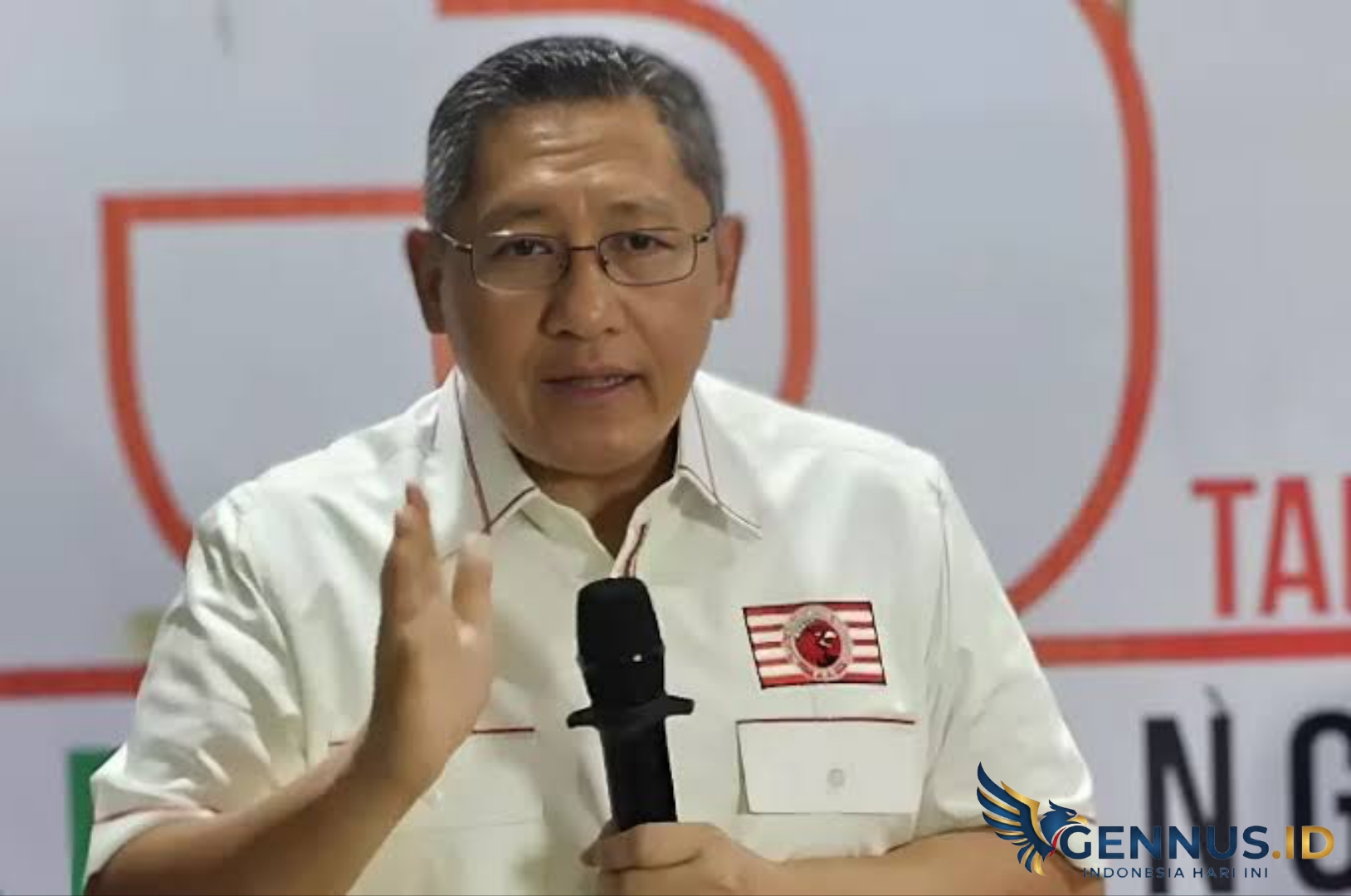
GENNUS.ID, JAKARTA – The General Chair of the Nusantara Awakening Party (PKN), Anas Urbaningrum, has offered a critical assessment of the growing discourse regarding returning the election of regional heads to Regional Legislative Councils (DPRD). As a key figure who helped birth the era of direct elections during his tenure as a member of the General Elections Commission (KPU) from 2001 to 2005, Anas warned that the nation must not fall into the trap of making drastic political decisions without a clear evaluative basis.
Anas perceives a “backward” mindset in responding to the current shortcomings of the democratic system. He emphasized that major policy shifts should not stem from forced pragmatic desires.
”We should avoid the reverse model: reaching a conclusion first and then seeking justification later. Do not jump straight to the conclusion of returning the mandate to the DPRD,” Anas stated in a written release.
Between “Money Politics” and Regional Productivity
The former Chairman of the Islamic Students Association (PB HMI) does not deny the “dark side” of direct regional elections over the past two decades. He highlighted the phenomenon of “envelope power” (money politics) and capital-intensive political costs that he describes as increasingly “brutal,” drawing parallels to the dynamics of the national elections held last February.
However, Anas asserted that technical flaws in the election process do not automatically justify stripping citizens of their voting rights. For Anas, the success of a system must be measured by its impact on regional welfare.
”The fact is, direct elections have their pros and cons. In some respects, they have become more brutal due to the intervention of ‘envelope power,’ much like the national elections in February. Yet, the most critical issue is local government productivity. Does the outcome bring progress to the region and improve the lives of the people?” Anas remarked.
Proposing Academic Testing Before Final Decisions
Anas proposed that the government and Parliament (DPR) follow a sound methodological path in revising the law. He rejected the notion of treating the DPRD-led election option as a premature conclusion. Instead, he argued it must pass through three crucial stages:
• Objective academic study
• Extensive public consultation
• The formal political process in Parliament
He reminded the public that, historically, direct elections were born as a correction to the inherent flaws of the old DPRD-based system. If the system is to be changed again, the reasoning must be rooted in democratic effectiveness, not merely as a political escape.
”Returning elections to the DPRD is one option. However, it is not the only democratic choice available. It must be scrutinized and tested through healthy academic and public debate,” he added.
A Call for Healthy Public Discourse
Closing his statement, Anas emphasized that the PKN is open to various options for improving the democratic system, including elections via DPRD, provided such a move is the result of objective data recommendations rather than a “pre-ordered” decision.
He invited all elements of the nation—from academics to activists—to open a wide space for discussion to dissect the future of local democracy in Indonesia.
”Let us begin the study and evaluation. Let us open a healthy public debate. Involve as many of the best minds and ideas this country has to offer,” Anas concluded. (Red)