










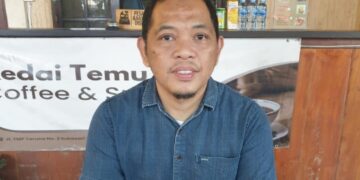




JAKARTA, GENNUS.ID – Denny Charter, Deputy Chairman of the National Leadership of the National Awakening Party (PKN), issued sharp criticism of Minister of Home Affairs Tito Karnavian’s statement urging the public to switch to sago, corn, or sorghum amid soaring rice prices.
Denny argued that the narrative “if it’s expensive, eat something else” is not merely a dietary suggestion, but a dangerous oversimplification that reflects a lack of empathy for people’s hardships.
“Public policy should provide structural solutions — not merely recommend alternative menus. This statement effectively shifts the burden of failed food-price stabilization policies onto the people’s dinner tables,” Denny said in a written statement on Monday.
A Vicious Cycle of Corruption and Food Prices
According to Denny, the government’s failure to control rice prices is closely tied to weak bureaucratic integrity. He highlighted a “vicious cycle” between policy-making and corrupt practices, ranging from large-scale import scandals to illegal levies along distribution chains.
He explained that cartel practices and bribery in determining import quotas keep consumer prices high even when global supply is abundant. Meanwhile, inefficiencies in agricultural infrastructure spending — such as irrigation systems and subsidized fertilizers — frequently lead to budget leakages.
“As a result, domestic production remains low, prices surge, and officials resort to food substitution rhetoric as a shortcut to mask production failures,” he emphasized.
Structural Failures Shifted to Individuals
Denny further argued that the government’s reasoning is inconsistent. The rice problem, he said, is a macro-economic issue involving supply chains and speculation control — yet the solutions being proposed target individual behavior.
“The government is responsible for supply and price stabilization, but citizens are being pushed to take responsibility on the demand side by reducing consumption or switching staple foods,” Denny said.
He warned that encouraging people to replace rice with tubers risks normalizing state failure. Once corruption penetrates food governance, he added, decisions are no longer based on public needs, but on who profits from scarcity.
Food Is a Human Right
Denny stressed that food is not merely a tradable commodity, but a fundamental human right that must be guaranteed by the state. As long as loopholes enabling corruption in distribution and imports remain, he warned, prices will continue to suffocate households.
“People should not be given ‘soothing remedies’ in the form of substitution advice that fails to address root causes. Without the courage to dismantle rent-seeking networks, our food policies will continue to burden the poor,” he concluded. (Red)